
The REGAIN Method™
We want more than a dog who behaves differently. We want a dog who feels differently.
Developed through work with reactive, fearful and overwhelmed dogs, the REGAIN Method looks beyond barking, lunging, withdrawal or shutdown to understand the individual dog experiencing it.
It’s the methodology guiding all of my services, not just the REGAIN Signature Programme.
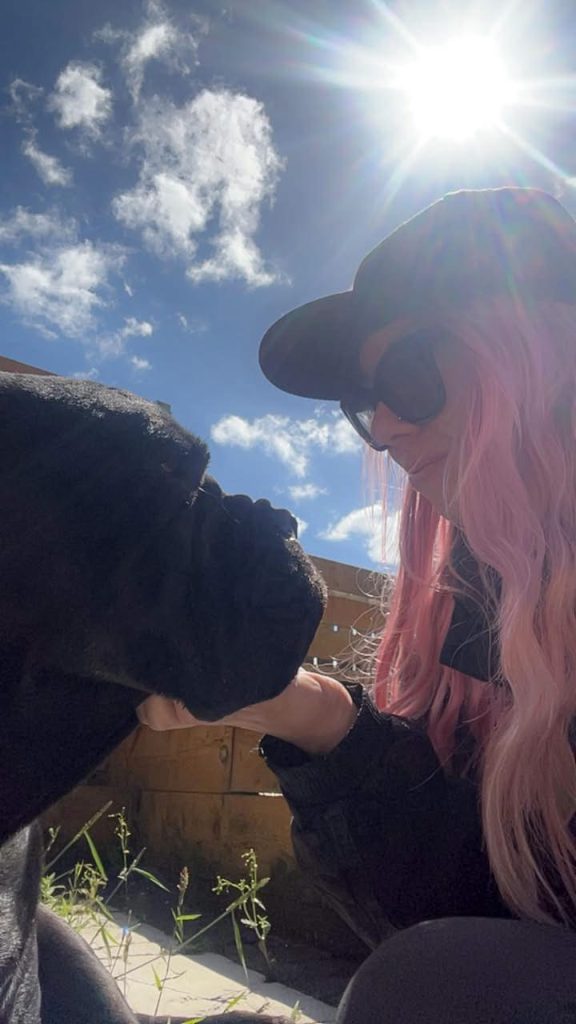 Developed by Jess.Shaped by real dogs.
What is the REGAIN Method™?
The REGAIN Method is my trauma-informed, nervous-system-first approach to supporting dogs and their guardians. I start by understanding what your dog is experiencing and supporting their ability to cope and recover.
From there, we work towards different emotional responses, and behaviour and communication that work better for your dog.
We don’t just want our dogs behaving differently. We want them feeling different too.
This is not a rigid sequence. The different parts of the work influence each other throughout.
Each foundation changes the questions we ask.
Whole Dog Understanding
What else could be shaping this?
We look at how physical wellbeing, inherited traits, learning history, sensory experience, environment, communication and relationship interact, so one convincing explanation doesn’t become the only explanation.
Nervous System Regulation
What can this dog access right now?
A dog may know a skill and still be unable to use it under pressure. That changes the timing, pace and setting of the work.
Changing Emotional Responses
What needs to feel different?
A different action is not always evidence of a different emotional experience. The quality of change matters, not only its appearance.
Individualised Integration
Can this work in the life they actually live?
A plan must fit the dog, the guardian, the home and the capacity available. Support must remain usable when life is tired, busy, unpredictable or imperfect.
Behaviour is the clue. Not the whole story.
The same outward behaviour can come from very different internal experiences. So before asking a dog to respond differently, the REGAIN Method asks what their current response is doing for them.
Food, rewards and training all have their place in my work. But I don’t rely solely on distraction, constant food rewards or obedience instructions to get a dog through the moment.
I want your dog to become better able to experience and respond to their surroundings, rather than needing every moment managed.
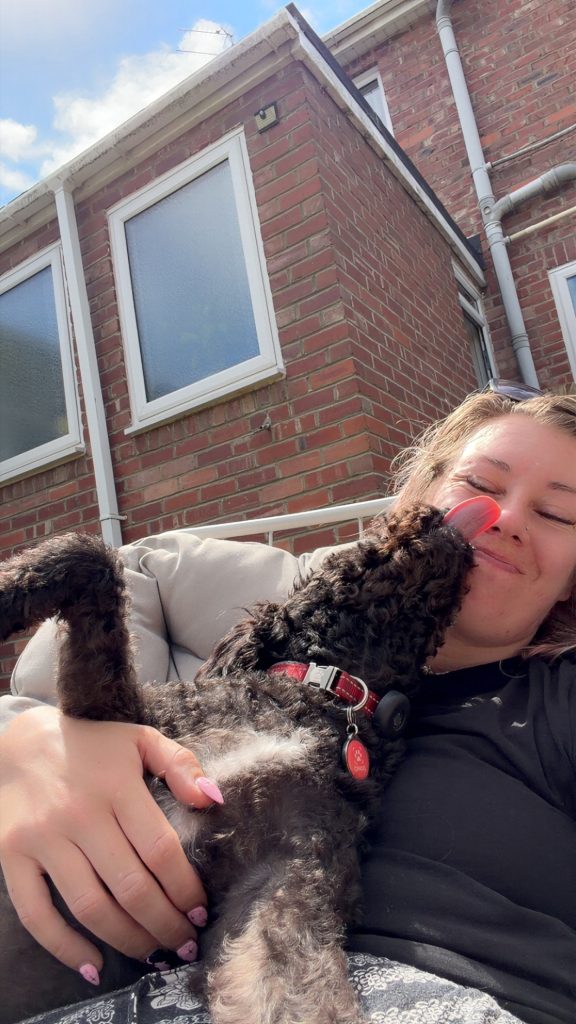
Trauma-informed, whatever the history.
Trauma-informed practice means paying close attention to safety, choice and pace, and avoiding approaches that add fear or pressure. A dog does not need a known traumatic history to benefit.
A lens, not a label.
Polyvagal theory is one influence on how I think about stress, perceived safety and recovery. It sits alongside behaviour science, observation, history and physical wellbeing, not in place of them. It is not used to diagnose a dog, and your dog’s changing response remains the feedback.
What does progress actually look like?
The REGAIN Method isn’t working towards a perfectly behaved dog. We’re looking for changes that tell us your dog is becoming better able to cope with their world.
- Noticing another dog without immediately lunging
- Recovering more easily after something difficult
- Exploring, sniffing and making choices
- Guardians recognising earlier signs of discomfort
- Less reliance on constant instructions
Zena
Checking in instead of constantly scanning the environment.
Zena is an Akita who reacted strongly to other dogs. Because food wasn’t always meaningful to her, sniffing and access to her surroundings became part of how she was supported.
In the early sessions, Zena began checking in more often and listening more easily.
Read Zena’s story
Your dog’s progress will be their own. Every dog has their own history, needs and pace. These are individual experiences, and progress can’t be guaranteed.
How to access the REGAIN Method™
The REGAIN Method informs all of my work. Whichever support you begin with, the same thinking shapes it.
Not sure where to begin? I’ll recommend the most appropriate support during your free Discovery Call.